

The first few years of a child’s life are filled with incredible growth. During this time, children develop the foundations for thinking, learning, communication, emotional intelligence, and social interaction. Research consistently shows that the experiences children have before the age of eight significantly influence their academic success, personality, and future career outcomes.
In today’s fast-changing world, early childhood education is no longer just about learning the alphabet, numbers, and colors. It is about nurturing curiosity, creativity, confidence, and critical thinking from an early age. As technology transforms industries and new careers emerge, children need much more than textbook knowledge. They need a strong foundation that prepares them to adapt, innovate, and succeed throughout life.
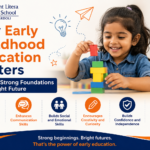
This is why choosing the right preschool and primary school has become one of the most important decisions parents make. Schools like Mount Litera Zee School Bardoli understand that early education should develop the whole child not just academic performance.
What Is Early Childhood Education?
Early Childhood Education (ECE) refers to structured learning programs designed for children from birth to around eight years of age. These years include preschool, kindergarten, and the early grades of primary school.
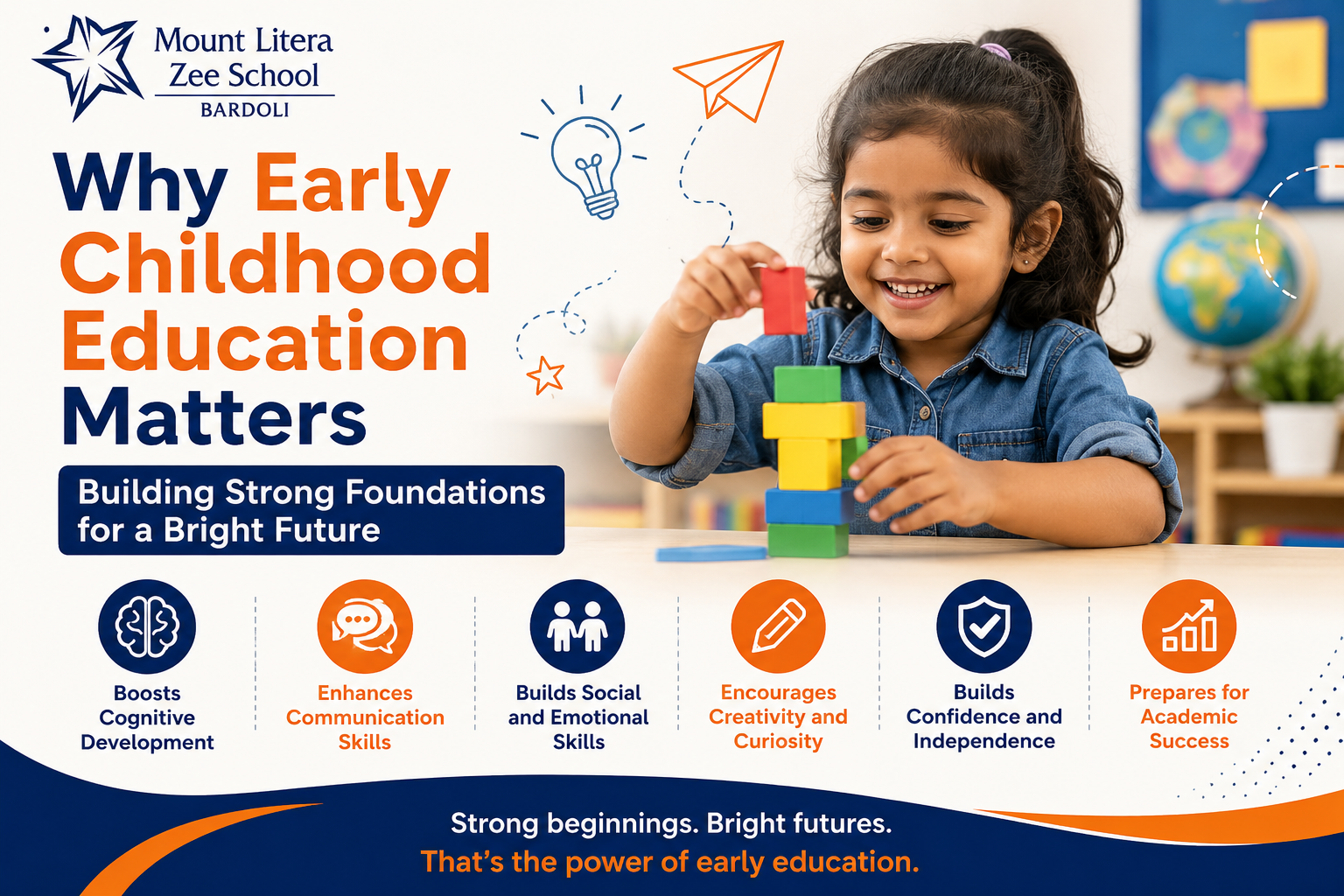
Rather than focusing solely on academics, quality early education helps children develop:
- Language and communication skills
- Social and emotional intelligence
- Creativity and imagination
- Problem-solving abilities
- Physical coordination
- Independence and confidence
- Healthy habits and discipline
Every activity during these years contributes to a child’s overall development.
The Science Behind Early Learning
Scientists have discovered that nearly 90% of brain development occurs before the age of five. During this period, millions of neural connections are formed every second.
Positive learning experiences strengthen these brain connections, making it easier for children to:
- Learn new concepts
- Build memory
- Develop emotional resilience
- Improve concentration
- Solve problems effectively
On the other hand, limited stimulation during these crucial years can make future learning more challenging.
This highlights why investing in quality early childhood education has lifelong benefits.
Why Early Childhood Education Is More Important Today
The world has changed dramatically over the last decade.
Children today are growing up with:
- Artificial Intelligence
- Digital learning
- Smart devices
- Global competition
- Rapid technological changes
Future careers will demand skills like:
- Creativity
- Collaboration
- Adaptability
- Communication
- Critical thinking
- Emotional intelligence
These skills begin developing during early childhood—not in high school or college.
A modern school focuses on preparing children for life, not just exams.
Builds Strong Communication Skills
Children learn communication naturally through conversations, storytelling, role-playing, music, and classroom discussions.
Good communication helps children:
- Express ideas confidently
- Listen actively
- Build friendships
- Participate in group activities
- Develop leadership qualities
At Mount Litera Zee School Bardoli, interactive classroom activities encourage children to communicate confidently from an early age.
Encourages Curiosity
Young children constantly ask questions:
- Why is the sky blue?
- How do plants grow?
- Where does rain come from?
Quality early education encourages these questions instead of ignoring them.
Curiosity eventually becomes:
- Scientific thinking
- Logical reasoning
- Innovation
- Lifelong learning
Children who enjoy learning at an early age usually continue enjoying education throughout life.
Develops Social Skills
School introduces children to teamwork and cooperation.
They learn how to:
- Share
- Take turns
- Respect others
- Resolve conflicts
- Work in groups
- Show empathy
These interpersonal skills are equally valuable in adulthood.
Builds Emotional Intelligence
Academic success alone is no longer enough.
Children also need to understand:
- Their own emotions
- Others’ feelings
- Stress management
- Confidence
- Patience
- Kindness
Activities such as storytelling, collaborative play, and classroom discussions help children become emotionally stronger.
Improves Academic Readiness
Children who attend quality early education programs often perform better in:
- Reading
- Writing
- Mathematics
- Science
- Language development
More importantly, they enjoy learning instead of fearing it.
This creates a positive attitude toward school that continues for years.
Encourages Creativity
Creativity is becoming one of the most valuable skills in today’s world.
Children express creativity through:
- Drawing
- Painting
- Music
- Dance
- Building activities
- Storytelling
- Drama
Creative children become better problem-solvers because they learn there can be multiple solutions to one challenge.
Develops Independence
Early education teaches children small responsibilities like:
- Organizing their belongings
- Completing simple tasks
- Following routines
- Making decisions
These everyday habits gradually build independence and self-confidence.
Creates Better Learning Habits
Children begin developing habits that stay with them throughout life.
These include:
- Listening carefully
- Asking questions
- Completing activities
- Managing time
- Working with others
- Staying organized
Good habits established early reduce academic pressure in later years.
Physical Development Matters Too
Learning is not limited to classrooms.
Children also need opportunities for:
- Outdoor games
- Sports
- Dance
- Yoga
- Fine motor activities
- Gross motor development
Physical activity improves concentration, confidence, and overall health.
The Role of Parents
Parents remain a child’s first teachers.
Schools and parents work best when they become partners.
Parents can support early learning by:
- Reading together daily
- Encouraging curiosity
- Limiting unnecessary screen time
- Playing educational games
- Praising effort instead of perfection
- Creating consistent routines
When learning continues at home, children grow faster academically and emotionally.
Choosing the Right School Makes All the Difference
Every school follows a curriculum.
But great schools go beyond textbooks.
Parents should look for schools that offer:
- Child-centered learning
- Qualified and caring teachers
- Safe campus
- Interactive classrooms
- Activity-based education
- Strong communication with parents
- Focus on overall personality development
- Sports and extracurricular activities
- Modern teaching methods
The right environment shapes a child’s confidence and love for learning.
Why Parents Choose Mount Litera Zee School Bardoli
When selecting a school, parents want more than academic excellence they want a nurturing environment where their child feels safe, inspired, and encouraged to grow.
Mount Litera Zee School Bardoli is committed to providing holistic education that balances academics, creativity, values, and life skills. The school focuses on creating an engaging learning environment where every child is encouraged to explore, ask questions, and develop confidence.
Some of the key highlights include:
- Child-centric learning approach
- Experienced and dedicated faculty
- Safe and supportive campus environment
- Smart classrooms and modern teaching methods
- Focus on communication and personality development
- Sports, arts, music, and cultural activities
- Strong emphasis on values and character building
- Individual attention to every student
- Partnership with parents to support every child’s learning journey
The goal is not simply to prepare students for examinations but to equip them with the knowledge, skills, and confidence they need to thrive in the future.
Final Thoughts
Early childhood education is one of the most valuable investments parents can make in their child’s future. The experiences children gain during these formative years shape their ability to learn, communicate, solve problems, build relationships, and adapt to an ever-changing world.
By choosing a school that prioritizes holistic development, parents can give their children a strong foundation for lifelong success.
If you’re looking for a school that combines academic excellence with creativity, values, and all-round development, Mount Litera Zee School Bardoli provides an environment where young learners can discover their potential and build the confidence to succeed in every stage of life.
Admissions are now open. Visit the campus to experience the learning environment, meet the faculty, and discover how Mount Litera Zee School Bardoli can help your child begin a joyful and meaningful educational journey.
Frequently Asked Questions (FAQs)
1. Why is early childhood education important?
Early childhood education helps children develop essential cognitive, emotional, social, and physical skills during their most formative years. It lays the foundation for lifelong learning, confidence, creativity, and academic success.
2. At what age should a child start early childhood education?
Most children can begin early childhood education between the ages of 2.5 and 3 years, depending on their readiness. Enrolling in a quality preschool helps children adapt to structured learning and social interaction from an early age.
3. How does early childhood education support brain development?
The first five years of a child’s life are critical for brain development. Quality early education provides stimulating activities, play-based learning, and meaningful interactions that strengthen neural connections and improve learning abilities.
4. What should parents look for in the best school in Bardoli?
Parents should consider factors such as experienced teachers, a child-friendly environment, modern teaching methods, safety, extracurricular activities, academic excellence, and holistic development. Mount Litera Zee School Bardoli focuses on nurturing every child’s overall growth through a balanced educational approach.
5. Why choose Mount Litera Zee School Bardoli for your child?
Mount Litera Zee School Bardoli offers a child-centric learning environment, qualified educators, modern classrooms, co-curricular activities, and a strong emphasis on values, communication skills, and personality development. The school prepares students for academic success while fostering creativity and confidence.
6. Is Mount Litera Zee School Bardoli a CBSE school?
Yes, Mount Litera Zee School Bardoli follows a structured curriculum designed to promote academic excellence and holistic development, making it one of the preferred choices for parents seeking a quality CBSE School in Bardoli.
7. How does holistic education benefit children?
Holistic education focuses on developing a child’s intellectual, emotional, physical, social, and creative abilities. It helps children become confident learners, responsible individuals, and effective problem-solvers.
8. What activities are included in early childhood education?
Children participate in storytelling, music, dance, art, puzzles, outdoor play, language activities, STEM learning, group games, and creative projects that support overall child development.
9. How can parents support early learning at home?
Parents can encourage early learning by reading with their children, engaging in educational games, maintaining consistent routines, limiting screen time, encouraging curiosity, and communicating regularly with teachers.
10. How can I apply for admission to Mount Litera Zee School Bardoli?
Parents can visit Mount Litera Zee School Bardoli to explore the campus, interact with the faculty, understand the admission process, and learn more about the school’s programs for preschool, primary, and higher grades.